
For public entities, knowing what a property is worth is no longer a routine accounting exercise. Construction costs, labor shortages, tariffs, supply chain disruptions, climate risks, and changing insurance requirements have made property valuation increasingly complex.
An outdated property appraisal can create a significant gap between the value listed on a property insurance policy and the actual cost to repair or replace the asset. When a loss occurs, that gap can leave an organization with inadequate limits, unexpected expenses, and difficult questions from insurers and stakeholders.
A reliable property valuation program helps public entities understand their exposure, improve insurance outcomes, and make more informed risk management decisions. They can also dramatically improve rates when large programs negotiate their annual reinsurance.
Construction Costs Continue to Reshape Property Values
Construction costs have risen substantially since the pandemic. The presentation data shows that some construction cost measures increased more than 50 percent in approximately five and a half years. Longer term indexes reflect even larger increases.
Several factors continue to influence replacement cost spikes, including
- Higher skilled labor rates
- Material price volatility
- Tariffs and transportation expenses
- Interest rates and financing conditions
- Continued infrastructure spending
- Supply chain constraints
- Severe weather and climate related losses
- Global economic and political uncertainty
These pressures do not affect every property type or region equally. Buildings, utilities, equipment, and contents can experience very different cost trends. Applying one general percentage increase across an entire portfolio may not produce accurate replacement values.
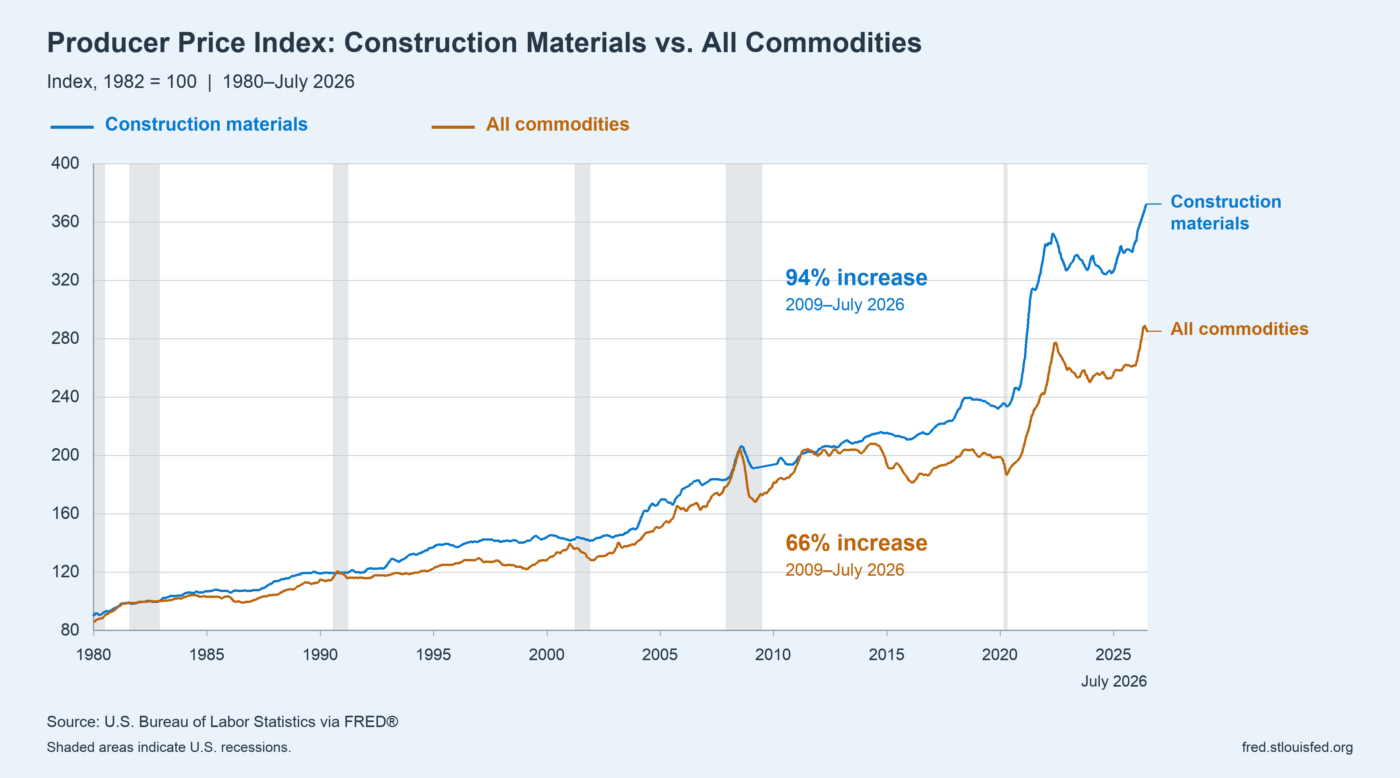
From 2009 through July 2026, the Producer Price Index for construction materials rose 94 percent, compared with 66 percent for all commodities, highlighting the sharper rise in construction material costs.
Insurance to Value Gaps Remain a Serious Risk
Insurance to value (“ITV”) describes the relationship between a property’s insured value and its actual replacement cost. When insured values fall behind current costs, organizations may face inadequate coverage when a claim occurs.
Insurers are paying closer attention to property values as recent claims have exposed gaps between reported limits and actual losses. Weak or incomplete property information can also reduce insurer confidence and affect coverage terms, capacity, and pricing.
Property values should therefore be reviewed as part of an ongoing risk management process, not only when an insurance renewal approaches. Proper valuation, however, is only one piece of the complete puzzle, and overuse of “desktop” value without a detailed, onsite inspection, can leave the insured in exposed positions.
Strong Property Appraisals Begin with Better Data
A property appraisal is only as reliable as the information behind it. A complete schedule of values should identify every insured location and include accurate information about each exposure. The most accurate solutions include onsite inspections by qualified appraisers to validate and update the full SOV, and deliver confidence and support for underwriting and reinsurance.
Underwriters often refer to their “Bible” as COPE:
- Construction identifies how the building was constructed.
- Occupancy explains how the property is used.
- Protection describes fire protection, water supply, hydrants, and emergency response.
- Exposure considers surrounding properties and nearby hazards.
Missing or inaccurate COPE information can negatively impact catastrophe modeling and underwriting decisions. Insurers use sophisticated models to analyze large property portfolios, but even the best model will produce unreliable results when the underlying data is incomplete.
A Schedule of Values Typically Includes More Than Buildings
Buildings are only part of an organization’s total property exposure. Contents, machinery, equipment, and property in the open are frequently overlooked or undervalued.
High density storage areas, technology spaces, stockrooms, fencing, lighting, playgrounds, pedestrian bridges, and mobile property can all represent significant value. These assets should be identified, valued, and trended alongside buildings.
Contents and equipment costs may also fluctuate at a different rate than building costs. Reviewing fixed asset schedules and separating major equipment categories can help organizations identify concentrations of value that deserve additional attention.
Utility Properties Require Specialized Valuation
Water and wastewater facilities, and electric generating, transmission and distribution exposures all present unique appraisal challenges. Treatment plants are complex, vary widely in technology, and cannot always be valued using standard building models.
Public entities should pay particular attention to treatment structures, pump stations, lift stations, generators, substations, major additions, and recent upgrades/renovations. These assets are often inconsistently valued or omitted from property schedules altogether. It should also be noted that the replacement costs for this class of exposures have actually trended higher than standard commercial construction in the post-COVID era.
A specialized utility appraisal uses relevant construction data and asset specific valuation methods to produce a more defensible estimate of replacement cost.
Build a Consistent Property Appraisal Program
Many organizations are moving toward a three to five year property appraisal cycle. Before the pandemic, appraisal cycles of five to seven years were more common, but rapidly escalating costs have made long intervals increasingly risky.
When budgets are limited, organizations can begin with their largest or most material locations. A complete ground up appraisal provides the clearest picture because it can identify missing properties, remove assets that should no longer be listed, and independently verify values. Additionally, reviewing all properties will result in a more complete, robust SOV for your next renewal.
Between appraisals, organizations should report new construction, renovations, additions, sales, demolitions, and transfers of properties. Annual value trending is also essential, but the selected index(es) should always reflect the property type, location, and asset class.
A consistent valuation program provides greater confidence that assets are accurately documented, appropriately insured, and ready for underwriting review. The result is not simply a better schedule of values. It is a stronger and more resilient property risk management program.
Property Valuation Insights At-A-Glance
A three to five year appraisal cycle is increasingly common. Larger or higher value locations may need to be reviewed first when budget limitations prevent a complete appraisal.
The schedule of values supports insurance placement, catastrophe modeling, coverage limits, and claim settlement. Missing or inaccurate information can contribute to coverage gaps and unfavorable underwriting outcomes.
No. Trending is never a perfect science. It helps update values between appraisals, but cannot identify missing assets, incorrect building information, unreported renovations, or changes in property use.
Contents, specialized equipment, fencing, lighting, playgrounds, pedestrian bridges, pump stations, generators, and other property in the open are commonly missed or undervalued.
Utility facilities include complex structures and specialized treatment equipment that standard valuation models cannot capture accurately. Customized data and valuation methods provide reliable replacement costs.
Property values will continue to change as labor, materials, tariffs, climate conditions, and economic forces evolve. Public entities cannot control those pressures, but they can control the quality of their property data and appraisal practices.